



When people think about waterproofing a building, their first concern is usually keeping water out. However, there is another hidden threat beneath the ground that deserves equal attention—radon gas.
Invisible, odourless and naturally occurring, radon can enter buildings through the ground and accumulate indoors over time. Because of the health risks associated with prolonged exposure, effective radon protection has become an essential part of many construction projects throughout the UK.
Whether you’re building a new home, constructing commercial premises or waterproofing a basement, understanding radon barriers is key to creating a safe, compliant and long-lasting structure.
What Is Radon?
Radon is a naturally occurring radioactive gas formed by the breakdown of uranium in rocks and soil. It is present across the UK, with some areas having significantly higher concentrations than others.
Unlike other gases, radon has:
- No colour
- No smell
- No taste
This means it cannot be detected without specialist testing equipment.
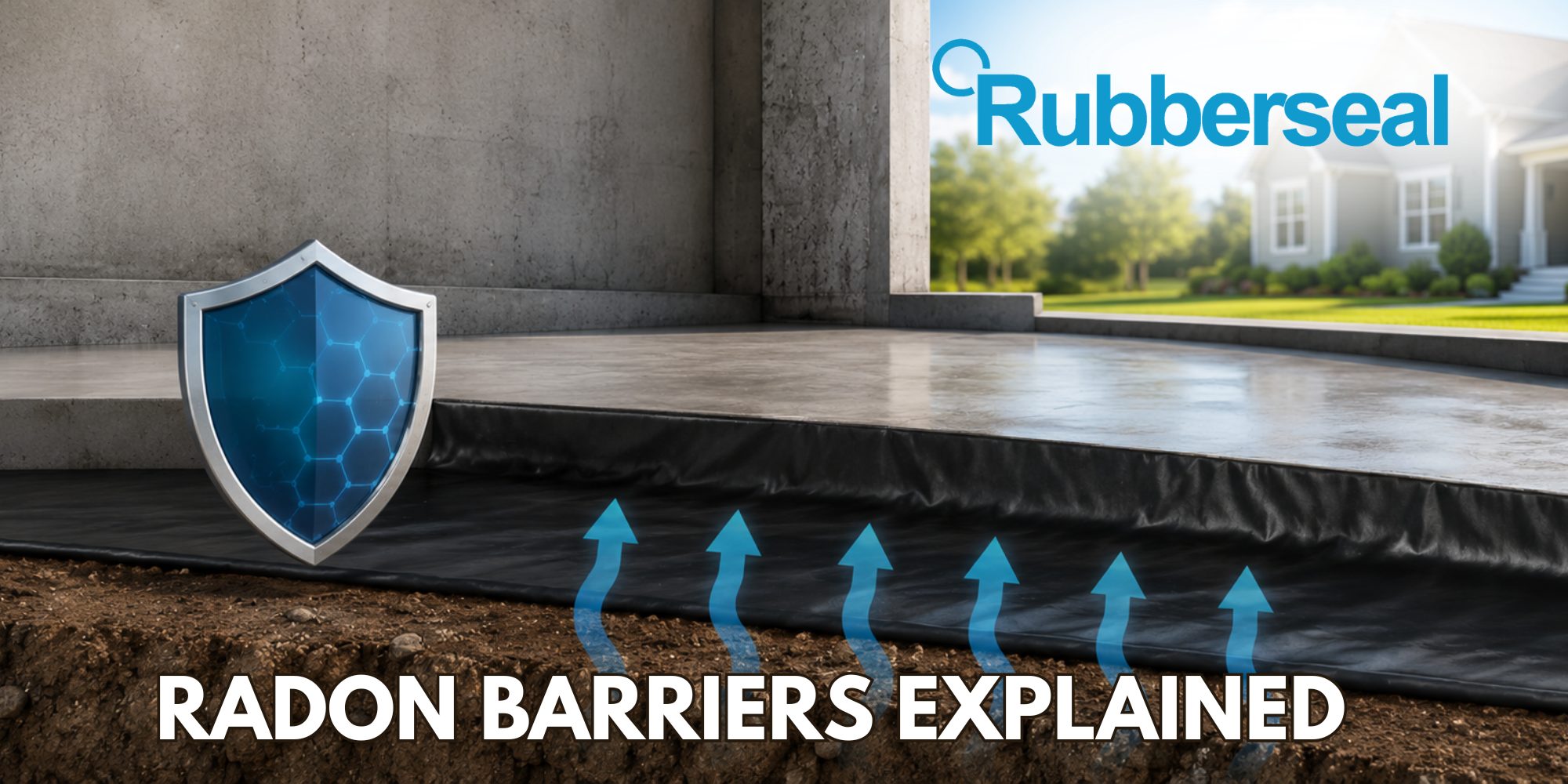
As the gas rises through the ground, it naturally seeks the easiest route into a building.
How Does Radon Enter Buildings?
Even well-constructed buildings can allow radon to enter if suitable protection is not installed.
Common entry points include:
- Cracks in concrete slabs
- Construction joints
- Service penetrations
- Foundation walls
- Floor and wall junctions
- Porous concrete and masonry
Once inside, radon can become trapped, particularly within basements and ground floor rooms where ventilation is limited.
Why Is Radon Dangerous?
According to public health guidance, prolonged exposure to elevated radon levels increases the risk of lung cancer.
In fact, radon is recognised as one of the leading causes of lung cancer after smoking.
Because the gas cannot be seen or smelled, occupants are often unaware they are being exposed.
Preventing radon from entering a building is therefore far more effective than attempting to deal with the problem later.
Where Are Radon Barriers Required?
Certain parts of the UK are designated as Radon Affected Areas, where additional protective measures are recommended or required under Building Regulations.
Radon barriers are commonly specified for:
- New-build homes
- Extensions
- Basements
- Cellars
- Commercial buildings
- Schools
- Hospitals
- Public buildings
- Below-ground structures
Even in areas where radon levels are lower, many designers choose to include a barrier as part of a comprehensive waterproofing strategy.
What Is a Radon Barrier?
A radon barrier is a continuous protective layer installed beneath or around a building to prevent radon gas from migrating into occupied spaces.
To be effective, the barrier must remain completely continuous throughout the structure.
This means carefully sealing around:
- Pipe penetrations
- Drainage outlets
- Service entries
- Construction joints
- Corners and changes in level
Even a small gap can significantly reduce the effectiveness of the system.
The Importance of a Seamless Barrier
Traditional sheet membranes rely on overlaps, taped joints and welded seams.
While these systems can perform extremely well when installed correctly, every joint introduces another area that must be detailed perfectly.
Liquid-applied radon barriers offer an alternative by creating a fully bonded, seamless coating directly onto the substrate.
Because there are no overlaps or seams, liquid systems can be particularly effective on complex structures featuring multiple penetrations, irregular shapes and difficult detailing.
Combining Waterproofing and Radon Protection
Many below-ground structures require protection from both groundwater and ground gases.
Historically, this often meant installing separate waterproofing and radon barrier systems.
Modern liquid technologies now allow both functions to be combined into a single application, reducing installation time and simplifying specification.
This is particularly beneficial for:
- Basements
- Lift pits
- Retaining walls
- Foundations
- Concrete roofs
- Water-retaining structures
Choosing the Right Radon Barrier
When selecting a radon barrier, it’s worth considering more than just gas resistance.
A high-quality system should also provide:
- Excellent adhesion to concrete
- Resistance to hydrostatic pressure
- Compatibility with waterproofing systems
- Reliable performance on complex detailing
- Long-term durability
- Easy application around penetrations and awkward areas
These features help ensure the barrier performs throughout the life of the building rather than simply meeting minimum installation requirements.
Liquiflex® 10-Bar: Waterproofing and Radon Protection in One System
For projects requiring both waterproofing and radon protection, Liquiflex® 10-Bar offers an advanced liquid-applied solution.
This premium two-component polyurethane coating has been developed for demanding below-ground applications and can be used as both:
- A high-performance waterproofing coating
- A radon barrier
- A moisture-tolerant primer for fresh or damp concrete
Unlike traditional sheet membranes, Liquiflex® 10-Bar creates a seamless, fully bonded coating that eliminates joints and overlaps where water or gases could potentially migrate.
One of its key advantages is its exceptional waterproofing performance. Independently tested to UNE-EN 12390-8, Liquiflex® 10-Bar resisted 10 bar hydrostatic pressure continuously for three days with no visible humidity or water penetration, while untreated concrete specimens allowed water through in just a few hours.
The product can also be applied to fresh or damp concrete with moisture contents of up to 98%, allowing projects to continue without lengthy drying periods.
For contractors and specifiers looking to simplify below-ground waterproofing while incorporating effective radon protection, Liquiflex® 10-Bar provides an efficient, high-performance solution in a single system.
Final Thoughts
Radon is an invisible risk that should never be overlooked during construction. Installing an effective radon barrier helps protect building occupants, supports compliance with Building Regulations and provides long-term peace of mind.
As modern construction increasingly demands systems that deliver multiple performance benefits, liquid-applied technologies such as Liquiflex® 10-Bar offer an innovative approach by combining seamless waterproofing with dependable radon protection.
Whether you’re working on a new build, basement conversion or commercial development, choosing the right radon barrier is an investment in both the longevity of the building and the health of those who use it.