





When an existing flat roof begins to show signs of age, deterioration or persistent leaks, it can be tempting to assume that the entire roof needs to be stripped and replaced.
However, that isn’t always the case.
Depending on the condition of the existing roof and the construction beneath it, refurbishment may provide an effective way to restore waterproofing performance while reducing disruption, waste and the amount of existing material that needs to be removed.
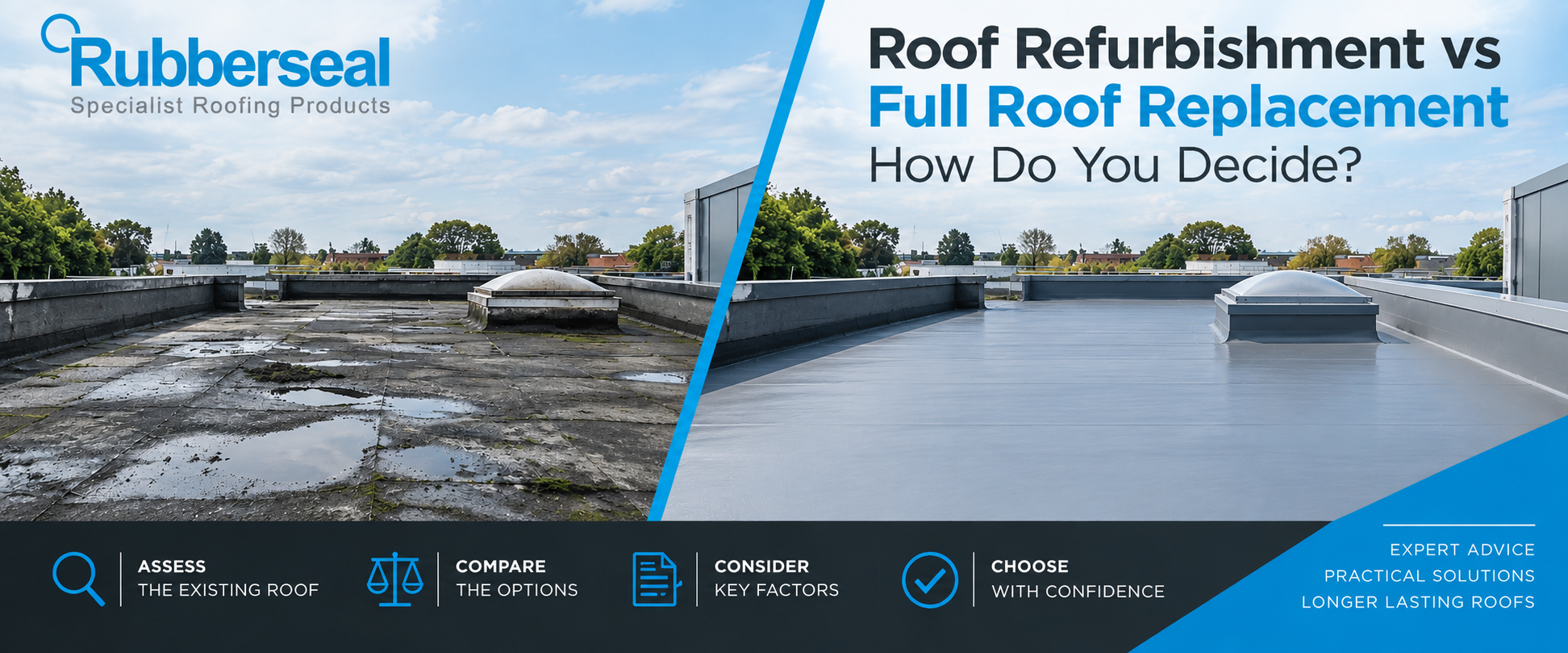
So, how do you decide whether a roof is suitable for refurbishment or whether a full replacement is the better approach?
Start With the Existing Roof
Before specifying any new waterproofing system, it is important to understand exactly what you are working with.
An existing roof should be properly assessed to establish the condition of the waterproofing, deck, insulation and other elements within the roof build-up.
Some of the key considerations include:
- The type and condition of the existing waterproofing
- Signs of water ingress or trapped moisture
- The condition and suitability of the roof deck
- Existing insulation and thermal performance
- Falls and drainage
- Upstands, outlets, penetrations and other details
- Areas of movement, cracking or deterioration
- The proposed future use of the roof
A roof that looks worn from the surface may still have a sound underlying construction, while a roof that appears relatively serviceable can sometimes be hiding moisture or deterioration below.
This is why assessment should always come before system selection.
When Can a Flat Roof Be Refurbished?
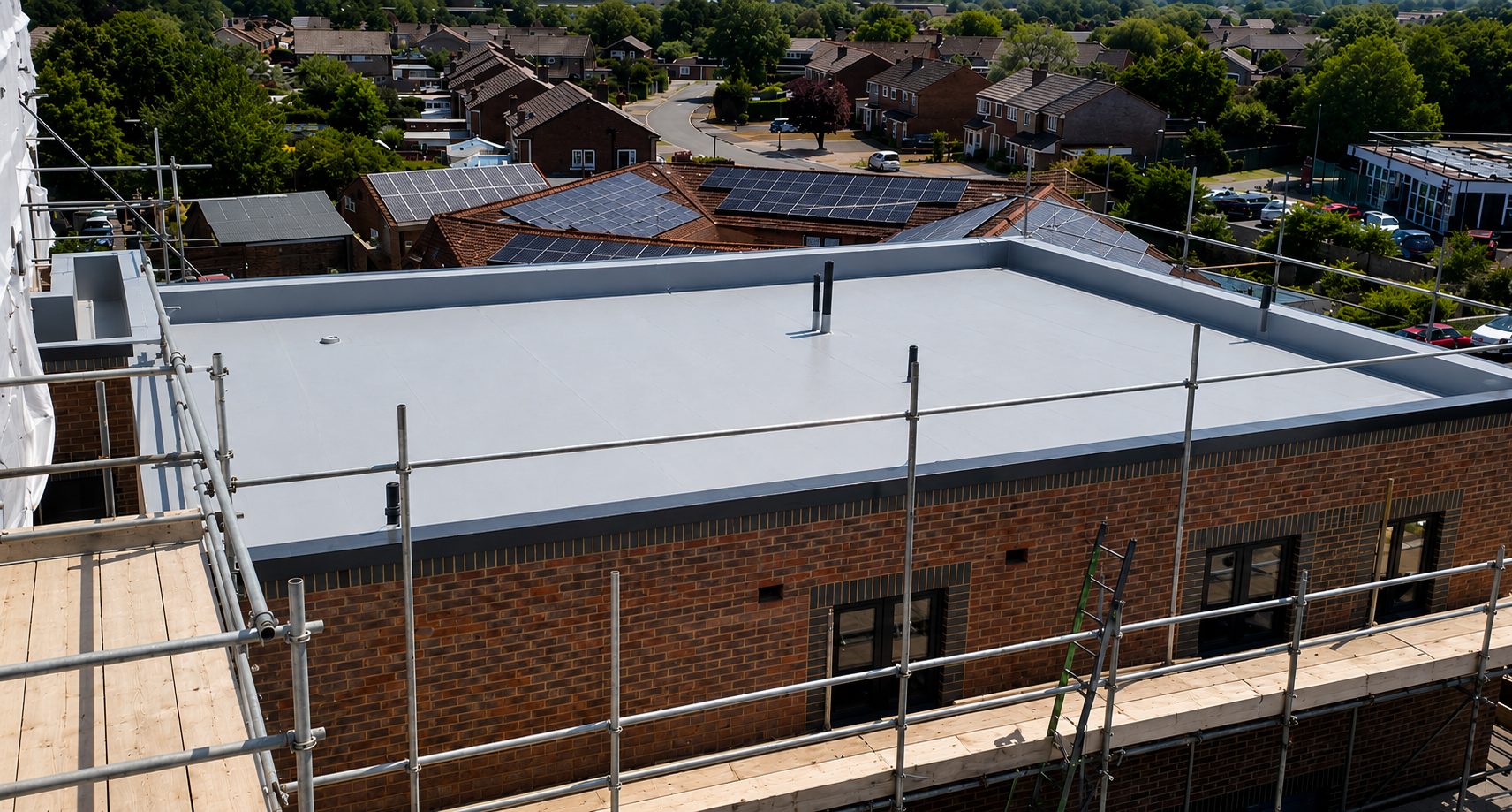
Where the existing roof and substrate are suitable, it may be possible to install a new waterproofing system over the existing roof rather than carrying out a complete strip.
This can be particularly beneficial on commercial and industrial buildings where removing an existing roof could create considerable disruption.
Depending on the existing substrate and project requirements, refurbishment solutions can include liquid-applied waterproofing, EPDM or single-ply systems.
Liquid waterproofing can be especially useful for refurbishment projects involving complex roof shapes, penetrations and difficult detailing because the system can be applied around existing features to create a seamless waterproof finish.
However, the existing substrate must always be assessed and correctly prepared before any overlay system is installed.
When Might a Full Roof Replacement Be Necessary?
Refurbishment isn’t suitable for every roof.
If there is significant deterioration within the existing construction, extensive trapped moisture, a damaged roof deck or other problems that cannot be adequately addressed through localised repairs, removing some or all of the existing roof may be necessary.
A replacement may also provide an opportunity to reconsider the complete roof build-up.
For example, improvements could be made to insulation, drainage or other elements of the roof construction at the same time as the new waterproofing system is installed.
The important point is that the decision should be based on the actual condition of the roof rather than its age or appearance alone.
Don’t Ignore Moisture
Moisture within an existing roof build-up is one of the most important factors to investigate before refurbishment.
Simply installing a new waterproofing membrane over a problem does not make that problem disappear.
Where moisture is suspected, further investigation may be required to establish its extent and determine whether affected areas can be removed locally or whether more extensive remedial work is necessary.
Identifying these issues at the beginning of a project can help avoid unnecessary work while also reducing the risk of problems developing beneath the new waterproofing system.
Consider the Whole Roof Build-Up
Waterproofing is only one part of a flat roof.
A successful refurbishment should consider how the complete roof construction will perform, including the deck, vapour control layer, insulation, waterproofing and drainage.
Thermal performance may also need to be considered when refurbishment work is planned.
This is particularly important when additional insulation is being introduced or the existing roof build-up is being significantly altered.
Taking a whole-roof approach helps ensure that the chosen solution addresses more than simply the visible surface.
Choosing the Right Waterproofing System
There isn’t one waterproofing system that is suitable for every refurbishment.
At Rubberseal, we supply a range of systems suitable for different roof constructions and project requirements, including:
Liquiflex Pro – a cold-applied liquid waterproofing system that can be particularly suited to refurbishment, complex detailing and a variety of existing substrates.
Liquiflex Ultra PUMA – a rapid-curing liquid waterproofing solution suited to projects where fast installation, durability or more demanding applications are required.
Elevate RubberGard EPDM – a durable EPDM membrane system suitable for a wide variety of commercial roofing applications.
Rhenofol Single Ply – a versatile single-ply waterproofing solution suitable for both refurbishment and new-build roofing projects.
The correct choice depends on the building, existing roof, substrate, detailing, project requirements and proposed use of the roof.
Refurbishment Can Reduce Waste and Disruption
Where technically appropriate, retaining suitable elements of an existing roof can offer several practical advantages.
Removing less material can reduce waste and the number of skips required on site, while avoiding a complete strip can help minimise disruption to the building below.
This can be particularly valuable for occupied commercial, industrial, education and public-sector buildings where maintaining normal operations during roofing works is important.
However, these benefits should never take priority over the technical suitability of the roof.
Refurbishment should only be considered where the existing construction provides a suitable basis for the proposed system.
Get the Specification Right From the Start
The choice between refurbishment and replacement shouldn’t be made by looking at the waterproofing membrane alone.
Understanding the condition of the existing roof, identifying potential moisture problems and considering how the complete roof build-up needs to perform are all essential parts of developing the right solution.
Rubberseal works with contractors, specifiers and clients to help assess roofing projects and identify suitable waterproofing solutions.
From initial roof surveys and technical advice through to specifications, system selection and contractor training, our team can provide support throughout the project.
Planning a Roof Refurbishment?
If you have an existing flat roof that requires refurbishment or replacement, speak to the Rubberseal technical team.
We can help assess the existing roof, discuss the available waterproofing options and recommend a system suited to the requirements of your project.
Contact Rubberseal today to discuss your next roofing project.