





Choosing the right flat roof waterproofing system involves considerably more than selecting a membrane.
The roof design, substrate, complexity of detailing, installation programme, anticipated traffic and whether the project is new build or refurbishment can all influence which waterproofing technology is appropriate.
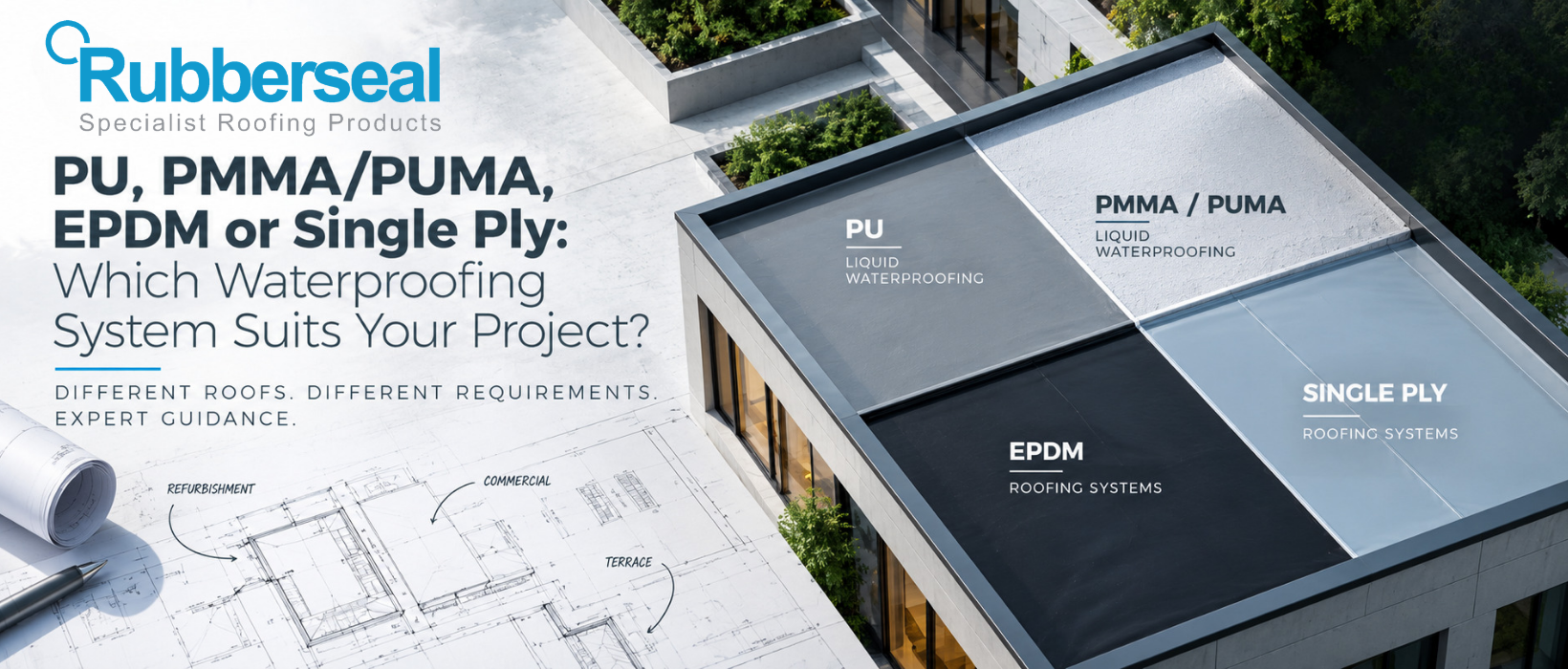
For architects, specifiers and roofing contractors, understanding the fundamental differences between PU liquid waterproofing, PMMA/PUMA liquid waterproofing, EPDM and single-ply roofing systems can help ensure the specification responds to the actual requirements of the project.
There is no single waterproofing technology that is suitable for every roof. The key is understanding where different systems can offer particular advantages.
Start With the Project – Not the Waterproofing System
Before considering membrane technology, the requirements of the roof itself should be established.
Important considerations include:
- New build or refurbishment
- Existing roof construction and substrate
- Roof size and geometry
- Number of penetrations and complex details
- Roof falls and drainage
- Installation programme
- Expected conditions during installation
- Access requirements
- Anticipated foot traffic
- Plant and maintenance areas
- Required service life
- Compatibility with adjoining materials
- Future use of the roof
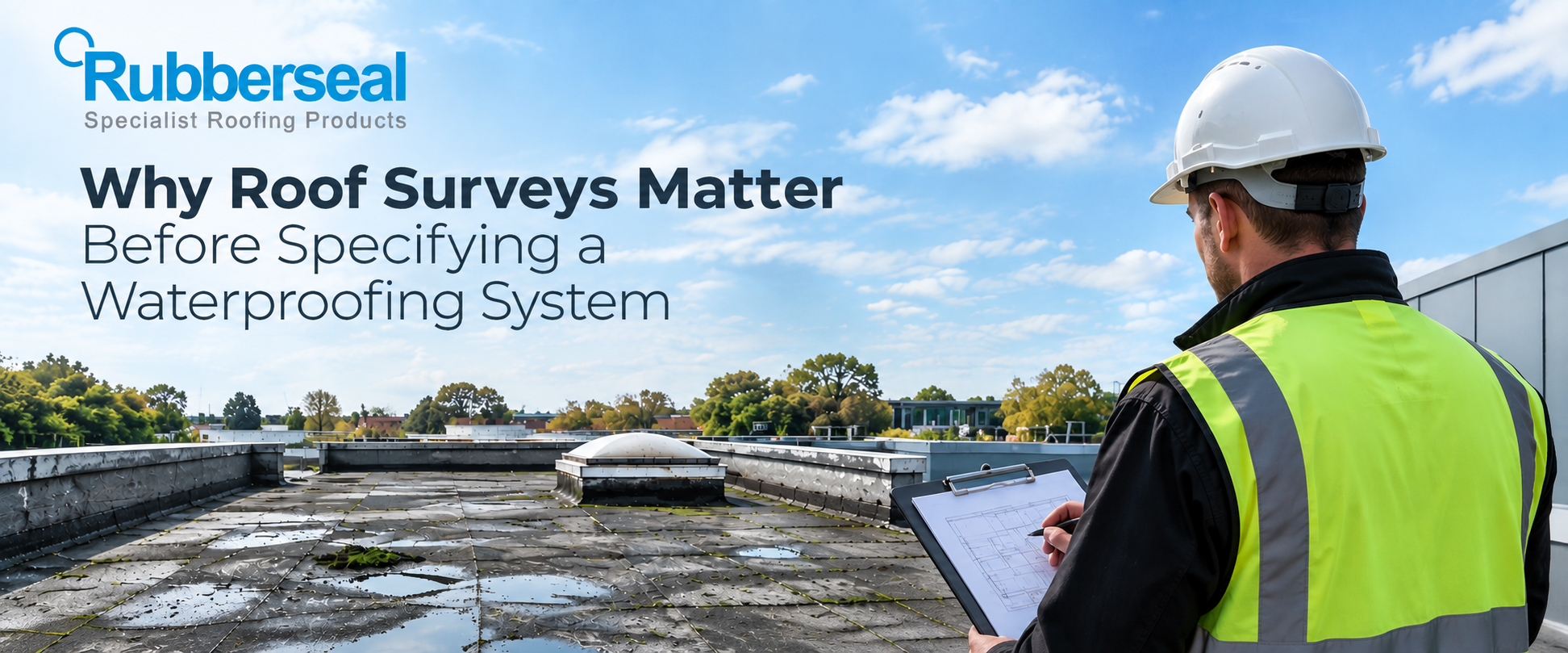
On refurbishment projects, the condition of the existing roof should also be properly assessed before deciding whether an overlay is appropriate.
Once these factors are understood, the advantages and limitations of different waterproofing technologies can be considered.
PU Liquid Waterproofing
Polyurethane (PU) liquid waterproofing systems create a seamless waterproof membrane that is applied directly to a suitably prepared substrate.
One of the principal advantages of liquid-applied waterproofing is its ability to accommodate complex roof geometry.
Roofs containing numerous penetrations, outlets, upstands, plant bases and irregular details can often be waterproofed without the extensive cutting and jointing associated with sheet membranes.
PU systems can therefore be particularly useful for flat roof refurbishment projects where the existing roof contains complex detailing.
Depending on the specified system, they may also be suitable for application over a range of existing substrates following the appropriate assessment and preparation.
However, substrate preparation is critical.
The existing surface must be suitable for the proposed system, and factors including moisture, contamination, adhesion and substrate condition should be considered before installation.
Ambient and substrate conditions during application may also affect installation and curing, so the requirements of the specified system should always form part of the specification.
PMMA and PUMA Liquid Waterproofing
PMMA and PUMA technologies are cold-applied, rapid-curing liquid waterproofing systems that can be particularly effective where projects involve complex detailing, restricted installation periods or areas where flame-applied roofing methods are undesirable.
Because the waterproofing is applied in liquid form, it can be installed around complex roof geometry and intricate details, creating a seamless waterproofing layer around areas that can otherwise be challenging to detail.
Typical areas can include:
- Roof penetrations and service pipes
- Plant and equipment
- Complex upstands
- Rooflights and kerbs
- Outlets and drainage details
- Balconies and terraces
- Walkways
- Irregular roof shapes
- Interfaces between different substrates
This can make PMMA and PUMA particularly useful for complex roof refurbishment projects where numerous existing details need to be incorporated into the new waterproofing system.
Cold Applied and Flame-Free
Another important consideration is that PMMA and PUMA systems are cold applied and do not require a naked flame during installation.
This can be particularly beneficial on projects where hot works are restricted or need to be minimised, including occupied buildings and sites where fire-risk management is an important consideration.
It also provides an alternative to waterproofing installation methods that require flame application.
Rapid Curing
Rapid curing provides another significant advantage.
Depending on the specific system and site conditions, individual layers can cure quickly, allowing subsequent stages of the waterproofing build-up to progress without lengthy waiting periods.
This can make PMMA and PUMA technologies particularly valuable where short installation windows or rapid return to service are required.
Potential applications can include:
- Commercial roof refurbishment
- Complex flat roofs
- Balconies and terraces
- Walkways
- Plant areas
- High-traffic locations
- Occupied buildings
- Projects with restricted working periods
- Areas where flame-free application is preferred or required
As with all liquid waterproofing systems, correct substrate assessment and preparation remain essential. Existing materials, moisture levels, surface condition and compatibility should be considered before installation, with appropriate preparation and primers specified where required.
EPDM Roofing Systems
EPDM is a synthetic rubber roofing membrane widely used for flat and low-slope roofing applications.
Unlike liquid waterproofing, EPDM is supplied as a sheet membrane.
Large-format sheets can allow substantial areas of a roof to be waterproofed with relatively few field seams, depending on the roof size, design and selected system.
EPDM is flexible and can accommodate normal building movement, making it suitable for a broad range of roofing applications.
It can be particularly effective on roofs with relatively straightforward geometry and large uninterrupted areas.
However, penetrations, upstands, perimeter details and interfaces still require careful installation.
The design should therefore consider not simply the main roof area but how the membrane will be terminated and detailed throughout the roof.
Single-Ply Roofing
Single-ply roofing systems use flexible sheet membranes installed as part of a complete roof build-up.
They are commonly specified on commercial and industrial flat roofs and can be particularly well suited to large roof areas and new-build projects.
Depending on the system and roof construction, single-ply membranes may be mechanically fixed, adhered or installed using another approved method.
One advantage of single-ply roofing is the ability to install large areas efficiently while forming welded joints between membrane sheets.
However, specification requires careful consideration of the complete roof construction.
The roof deck, vapour control layer, insulation, attachment method, wind-load requirements, perimeter zones and detailing should all be considered as part of the system design.
This makes early technical involvement particularly valuable on larger commercial projects.
Complex Roof Detailing
Roof geometry can have a significant influence on waterproofing system selection.
A large, open commercial roof with relatively few penetrations presents very different installation requirements from a roof containing extensive plant, ducts, pipework, rooflights and irregular upstands.
Sheet membranes can provide an efficient solution across large, uninterrupted roof areas.
Conversely, PU, PMMA and PUMA liquid-applied waterproofing systems can offer significant advantages where numerous penetrations, irregular shapes and complex details need to be incorporated into the waterproofing.
The ability to form a seamless membrane around intricate details, combined with cold application without the need for a naked flame, can make liquid waterproofing particularly valuable on complex refurbishment projects and occupied buildings.
This does not automatically make one technology preferable to another. The roof should be assessed as a complete structure, including both the main waterproofing area and every interface around it.
New Build vs Roof Refurbishment
Whether the project involves a new roof or refurbishment can also influence system selection.
On a new-build project, the complete roof build-up can usually be designed around the chosen waterproofing system from the outset.
Deck type, vapour control layer, insulation, falls, drainage and attachment methods can all be coordinated as part of the specification.
Flat roof refurbishment projects can be more complex.
Existing waterproofing, previous repairs, moisture, insulation condition, roof levels and substrate compatibility may all need to be investigated.
Where an overlay is being considered, the condition of the existing construction should therefore be established before the waterproofing specification is finalised.
Consider the Installation
Programme requirements are another important consideration when comparing waterproofing systems.
Some roofing projects allow relatively generous installation periods, while others involve occupied buildings, restricted access or extremely short working windows.
Questions to consider include:
- How quickly does the waterproofing need to be installed?
- How sensitive is the installation process to site and weather conditions?
- How quickly must the area return to service?
- Will other trades require access to the roof?
- Are there restrictions on working hours or building access?
- Are there restrictions surrounding hot works?
These practical considerations can significantly influence the suitability of different waterproofing technologies.
Where programme is particularly important, the rapid-curing characteristics of PMMA and PUMA waterproofing systems can be an important factor in the specification process.
What Level of Roof Traffic Is Expected?
Not every flat roof experiences the same level of traffic.
Some roofs are accessed only occasionally for inspection, while others contain plant requiring regular maintenance.
Balconies, terraces and walkways may experience considerably greater pedestrian traffic.
The intended use of the roof should therefore be established during the design stage.
Where regular access is anticipated, the waterproofing specification may need to incorporate appropriate protection, designated walkways or a system specifically designed for the expected level of traffic.
Future maintenance requirements should also be considered rather than focusing solely on how the roof will be used immediately after installation.
Don’t Forget Drainage and Roof Falls
The waterproofing membrane is only one component of a successful flat roof design.
Falls, outlets, gutters and drainage capacity all need to work alongside the waterproofing system.
The design should encourage effective drainage and minimise avoidable areas of standing water.
On refurbishment projects, existing ponding may indicate problems with falls, structural deflection or drainage that should be investigated before simply installing a new waterproofing layer.
Changes to insulation thickness and finished roof levels can also affect drainage and detailing, making coordination particularly important when upgrading an existing roof.
Think About the Complete Roof Build-Up
Waterproofing systems should not be specified in isolation.
A typical flat roof may incorporate:
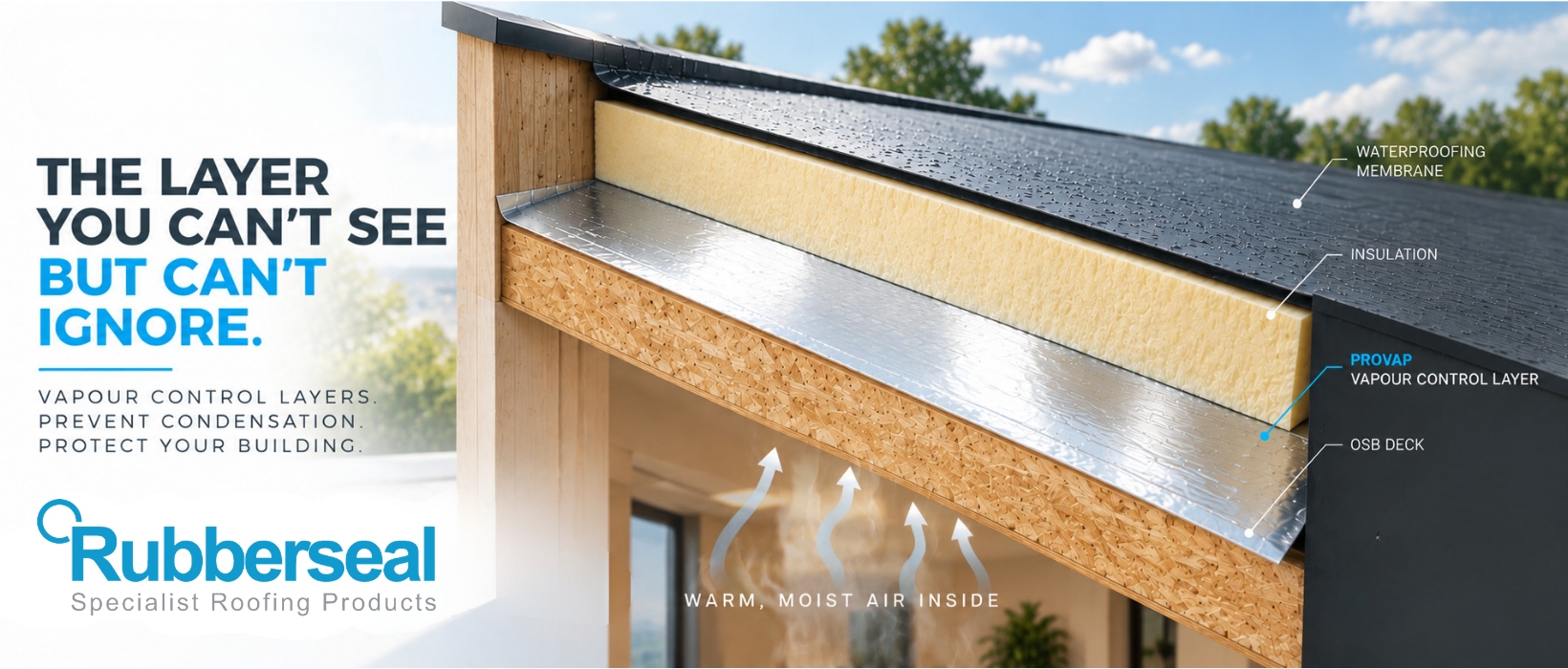
Structural Deck → Vapour Control Layer → Insulation → Waterproofing → Protection or Finishes Where Required
Each component interacts with the others.
The waterproofing specification should therefore consider thermal performance, condensation risk, wind loading, attachment methods, drainage, fire performance and compatibility between materials where applicable to the project.
For architects and specifiers, treating the roof as a complete system rather than a collection of individual products can help reduce potential conflicts later in the project.
So, Which Waterproofing System Should You Specify?
The answer depends on the roof.
A large, relatively uninterrupted commercial roof may have very different requirements from a refurbishment project containing dozens of penetrations.
Likewise, a balcony requiring rapid return to service presents different considerations from a roof that will only experience occasional maintenance traffic.
Rather than beginning with a preferred waterproofing technology, consider:
What is the existing or proposed roof construction?
How complex is the detailing?
What substrate will the waterproofing be applied to?
Are there restrictions surrounding hot works?
What are the installation and programme requirements?
How will the roof be accessed and used?
What performance requirements must the complete roof build-up achieve?
Answering these questions provides a much stronger basis for selecting an appropriate waterproofing solution.
Technical Specification Support From Rubberseal
Rubberseal works with architects, specifiers, main contractors and roofing contractors across the UK to support both new-build and refurbishment roofing projects.
Early technical involvement can help identify project-specific considerations, assess existing roof conditions and establish an appropriate waterproofing specification before work reaches site.
Where several waterproofing technologies could potentially be used, our technical team can help assess the project requirements and determine an appropriate approach based on the roof construction, detailing, programme and required performance.
Need Support With a Waterproofing Specification?
If you’re designing a new flat roof, preparing a refurbishment specification or evaluating waterproofing options for an existing building, speak to the Rubberseal technical team.
Contact Rubberseal to discuss your project and waterproofing specification requirements.